
How INAAYA Supports Motor Skill Development?
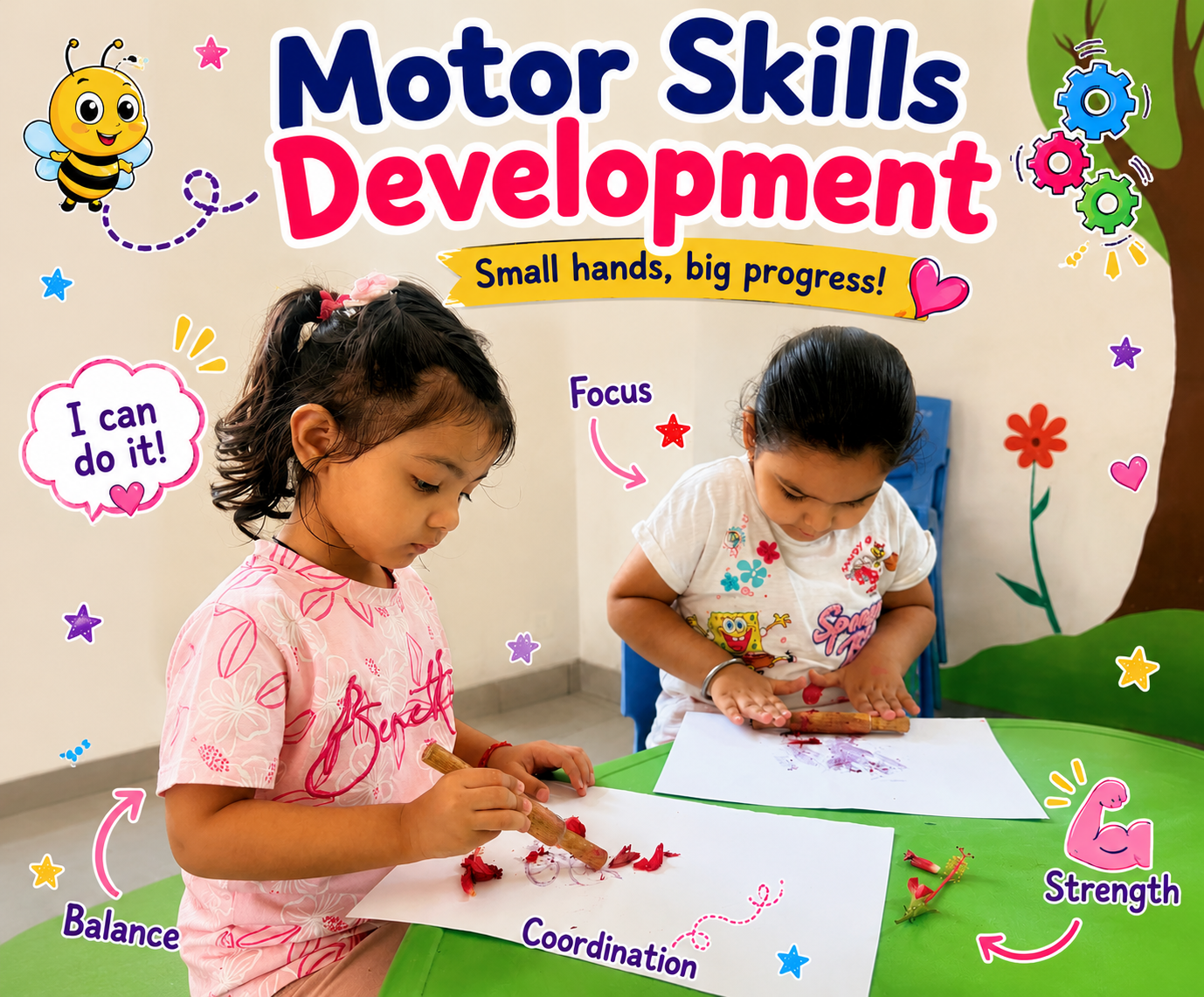
The first few years of a child’s life are filled with incredible growth and discovery. Before children learn to read, write, or solve math problems, they learn through movement. Every time they crawl, grasp a toy, stack blocks, jump, or scribble with a crayon, they are developing essential skills that prepare them for everyday life.
These movements are known as motor skills, and they play a vital role in a child’s physical, cognitive, social, and emotional development. Motor skills are broadly classified into fine motor skills and gross motor skills. While they involve different types of movements, both are equally important in helping children become confident, independent, and ready to learn.
What Are Motor Skills?
Motor skills are the abilities that allow children to control and coordinate their body movements. They develop gradually through play, exploration, and everyday experiences.
There are two main types of motor skills:
- Fine motor skills, which involve the small muscles of the hands, fingers, and wrists.
- Gross motor skills, which involve the large muscles of the arms, legs, and core.
As children grow, these skills work together to help them perform daily tasks, explore their environment, and build independence.
Understanding Fine Motor Skills
Fine motor skills enable children to make small, controlled movements using their hands and fingers. These skills are essential for everyday activities and become increasingly important as children prepare for preschool and school.
Examples of fine motor skills include:
- Holding a pencil or crayon
- Turning the pages of a book
- Building with blocks
- Using scissors
- Buttoning clothes
- Threading beads
- Eating with a spoon or fork
- Drawing and colouring
Strong fine motor skills help children perform classroom tasks such as writing, drawing, and cutting while also encouraging independence in everyday routines like dressing and feeding themselves.
Understanding Gross Motor Skills
Gross motor skills involve the larger muscles of the body and help children move confidently and safely. These skills allow children to participate in physical activities and explore their surroundings.
Examples include:
- Crawling
- Walking
- Running
- Jumping
- Climbing
- Balancing
- Dancing
- Throwing and catching a ball
- Cycling
Gross motor development supports balance, coordination, strength, and body awareness. It also encourages children to stay active, interact with others, and develop confidence through movement.
Fine Motor Skills vs. Gross Motor Skills
Although both are essential, they serve different purposes.
| Fine Motor Skills | Gross Motor Skills |
|---|---|
| Use small muscles in the hands and fingers | Use large muscles of the body |
| Drawing and writing | Running and jumping |
| Buttoning clothes | Climbing and balancing |
| Threading beads | Throwing and catching |
Children benefit most when they have opportunities to develop both types of skills every day.
Why Are Motor Skills Important?
Motor skills go far beyond physical movement. They influence many areas of a child’s overall development.
Encourage Independence
Tasks such as dressing, eating, brushing teeth, or carrying a school bag require good motor coordination. As children master these skills, they become more independent and confident in their abilities.
Support Brain Development
Movement and brain development are closely connected. Activities that involve planning, coordination, and problem-solving help strengthen the brain pathways responsible for attention, memory, and learning.
For example, building a tower with blocks not only strengthens finger muscles but also teaches children about balance, sequencing, and spatial awareness.
Prepare Children for School
School readiness isn’t just about knowing the alphabet or counting numbers. Children also need to hold a pencil correctly, sit comfortably, cut with scissors, and participate in classroom activities. Strong motor skills make these everyday learning experiences easier and more enjoyable.
Build Social Confidence
Physical play encourages teamwork, communication, sharing, and cooperation. Whether children are playing catch or participating in group games, they are developing important social and emotional skills alongside physical abilities.
Fun Activities That Develop Motor Skills
Children learn best through play. The following activities naturally strengthen both fine and gross motor skills while keeping learning enjoyable.
Fine Motor Activities
- Playing with playdough or clay
- Finger painting
- Building with blocks or LEGO
- Completing puzzles
- Threading beads
- Sticker activities
- Paper tearing and pasting
- Using tweezers to sort small objects
These activities improve finger strength, hand-eye coordination, creativity, and concentration.
Gross Motor Activities
- Running and jumping outdoors
- Dancing to music
- Obstacle courses
- Hopscotch
- Ball games
- Animal walks
- Cycling
- Yoga for children
These experiences improve balance, coordination, muscle strength, and overall physical fitness.
Signs Parents Should Watch For
Every child develops at their own pace, and slight variations are completely normal. However, parents may consider seeking guidance if they notice ongoing difficulties such as:
- Trouble holding crayons or pencils
- Frequent falls or poor balance
- Difficulty climbing stairs
- Avoiding physical activities
- Difficulty using scissors or buttons
- Limited coordination compared to their own previous progress
Rather than comparing children with others, it’s important to focus on individual growth and provide opportunities for regular practice through play.
How Inaaya Supports Motor Skill Development
At Inaaya, we believe that children learn best when they are actively engaged in meaningful experiences. Our play-based approach encourages children to explore, move, create, and discover in a safe and nurturing environment.
Through activities such as sensory play, art and craft, outdoor exploration, music and movement, block building, pretend play, and hands-on learning, children naturally strengthen both fine and gross motor skills while developing confidence and independence.
Every activity is thoughtfully designed to support holistic child development, ensuring that children not only build physical abilities but also enhance their creativity, problem-solving skills, communication, and emotional well-being.
Conclusion
Fine and gross motor skills are the building blocks of a child’s overall development. From holding a crayon to climbing a playground structure, every movement contributes to stronger muscles, better coordination, greater confidence, and improved learning.
The best way to support motor development is by giving children plenty of opportunities to play, explore, and move every day. These simple experiences help lay the foundation for lifelong learning, independence, and well-being.
At Inaaya, we celebrate every milestone—big or small—by creating joyful learning experiences that nurture the whole child. Because when children are encouraged to move, explore, and learn through play, they develop not only stronger bodies but also curious minds and confident hearts.