
WHY SOCIAL SKILLS MATTER MORE THAN ACADEMIC HEAD STARTS
There’s a quiet pressure many parents feel the moment their child turns two. Other children are counting. Reciting the alphabet. Some are being tutored. And suddenly, the question isn’t is my child happy — it’s is my child keeping up?
It’s worth pausing on that shift. Because the research on early childhood development is fairly unambiguous: the skills that determine how well a child learns — and how much they enjoy learning — are not academic. They’re social.
What “school readiness” actually means
When developmental experts talk about a child being ready to learn, they’re not referring to letter recognition or number sense. They’re referring to a child’s ability to regulate their emotions, sustain attention, take turns, communicate a need, recover from frustration, and engage with others without falling apart.
These are social-emotional skills. And they are the foundation on which everything academic is later built.
A child who cannot manage disappointment will struggle to persist through a difficult task. A child who hasn’t learned to listen will find group instruction chaotic. A child who hasn’t had space to play freely — to negotiate, imagine, test, and fail safely — often enters formal learning already exhausted by the pressure to perform.
What happens when we skip this stage
Early academic pressure doesn’t accelerate development. What it tends to do is narrow it.
Children who are pushed into structured academics before they’ve had adequate time for play-based, socially rich experience often show short-term gains that level off quickly — and sometimes reverse. More significantly, they can develop an anxious relationship with learning itself: one where being wrong feels dangerous, and curiosity takes a back seat to getting the right answer.
This isn’t a fringe view. It’s the position of the American Academy of Pediatrics, the OECD’s early learning research, and decades of longitudinal study on the outcomes of play-based versus academically-pressured early education.
What strong social development looks like
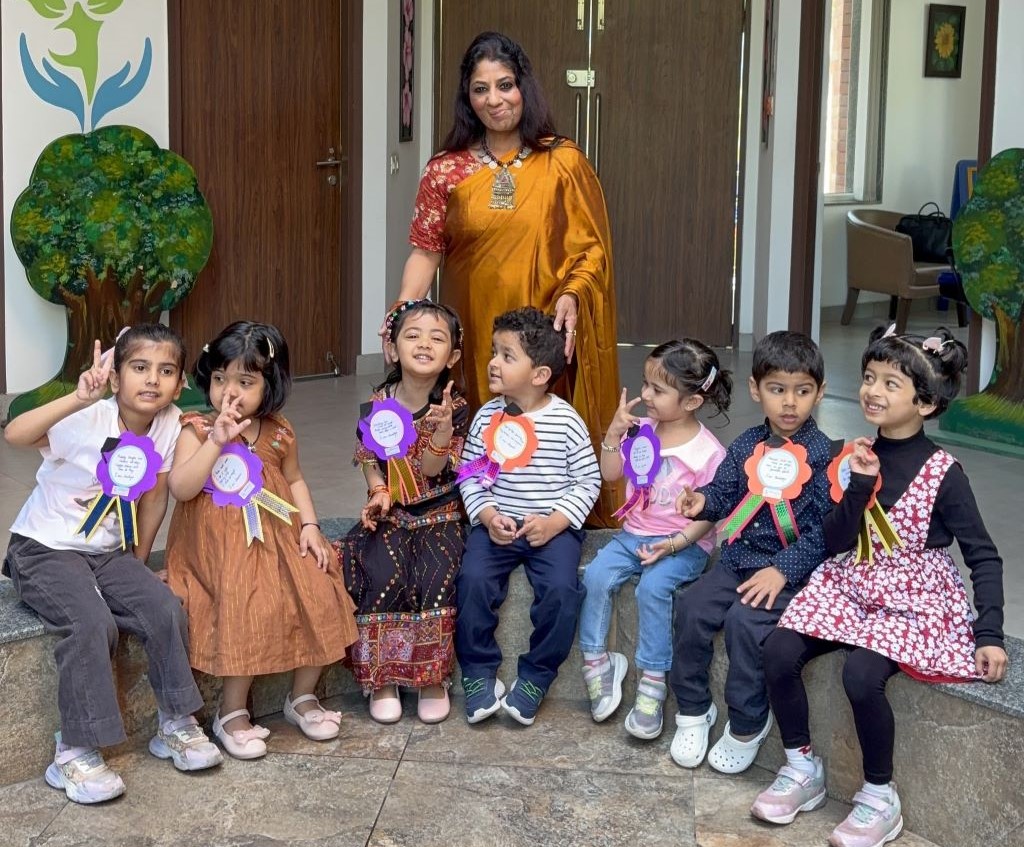
At INAAYA, we work with children from 9 months to 10 years across five age-based developmental cohorts — each designed around what children at that stage actually need, not what makes parents feel productive.
For our youngest Chubby Chicks and Busy Bees, that means sensory exploration, Fable Hour, music, and unstructured free play — with high mentor-to-child ratios that allow for the kind of individual attention that builds secure attachment. For our Buddy Bears and Creative Caterpillars, it means group activities, storytelling, creative expression, and the slow, deliberate practice of listening and responding to others. For our Magic Magpies, it means drama, debate, collaborative projects, and the confidence to take up space.
Across all of it, the thread is the same: children who feel safe, known, and capable are children who learn. Not because we’ve told them to — because they want to.
The question worth sitting with
If your child is three, and you’re weighing whether to prioritize phonics or play, here’s a more useful frame: which of those will teach your child that the world is a place worth being curious about?
Social development isn’t the soft alternative to academic preparation. It is the preparation.